From Insight to Action: Turning Feedback and Data into Real Business Results
By Emily O’Neil
In every growing business, there comes a point where information is everywhere: reports, KPIs, client feedback, and staff suggestions. But the real question isn’t how much data you have.
It’s what you do with it.
Many small and midsized business owners invest time gathering insights, yet few have a system for turning those insights into measurable change. The result? Missed opportunities, repeated mistakes, and a lot of effort with limited payoff.
Turning feedback and data into action doesn’t require more tools; it requires structure, focus, and follow-through.
The Missing Link Between Feedback and Strategy
Collecting feedback and tracking metrics are essential, but they only create value when connected to your strategy.
It’s easy to get caught up in measuring everything: social engagement, revenue growth, response times, satisfaction scores. But if you don’t know which numbers actually drive your goals, even the best dashboards lose meaning.
For example, a service-based business might monitor monthly revenue and client satisfaction, but miss the insight that delayed response times are impacting both. When leaders identify the connection between data and decisions, they can act with clarity and confidence.
Start by asking:
- Which metrics align directly with our core business goals?
- What insights keep showing up in team or client feedback?
- How often are we reviewing this information together?
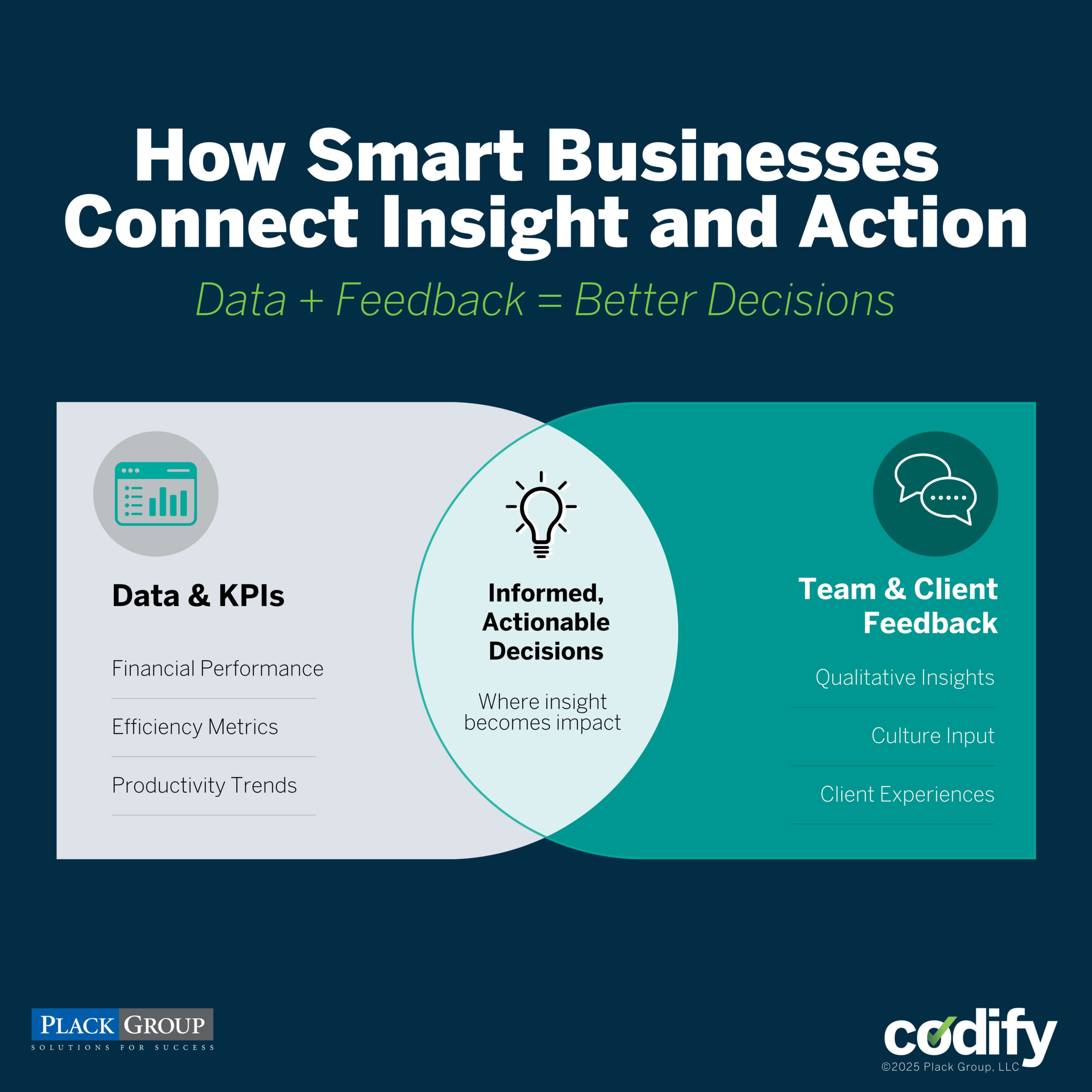
The goal is to connect your data and feedback into a single story that informs next steps, not just more reports.
Create a System for Reviewing Insights
Information is only useful if it’s reviewed consistently. Build a rhythm for reflection.
That might look like:
- Monthly insight reviews: Analyze top KPIs and summarize key team or client feedback.
- Quarterly leadership discussions: Identify trends and determine what needs adjustment.
- Annual strategic planning: Use those insights to shape long-term direction and investment decisions.
Blending quantitative (financial data, KPIs) and qualitative (employee or customer comments) inputs gives you a more complete view of your business. Assign one leader to gather and summarize this information before each meeting, ensuring it’s not just collected, but clearly communicated.
Remember: Insights lose value when they sit in spreadsheets. Schedule decisions, not just reports.
Turning Feedback into Focused Action
Every piece of feedback (good or bad) represents an opportunity to improve. But many organizations stop at acknowledgment instead of implementation.
Use a simple framework:
Listen → Identify Themes → Prioritize → Act → Review.
Let’s say your team identifies recurring communication issues that delay client projects. Turning that feedback into action could mean implementing a weekly project huddle or investing in clearer task management tools. Once the action is taken, revisit the topic 30 days later to measure progress.
By following up and sharing results, you close the loop, showing employees their input matters and reinforcing accountability across the organization.

Connecting Data to Daily Decisions
KPIs shouldn’t just be reviewed at year-end. They should shape your day-to-day leadership.
Think of your metrics as a navigation tool that is helping you steer before problems grow.
Example:
A business owner noticed profit margins slipping despite steady revenue. By pairing expense data with staff feedback, they uncovered unused software subscriptions and adjusted staffing to better match demand. Within a quarter, profitability rebounded by 8%.
Integrating these insights into daily management keeps your business agile. Discuss key metrics and themes in regular team meetings, not just executive sessions. When everyone understands the “why” behind the numbers, engagement and accountability rise together.
Measure, Reflect, and Refine
Data-driven decision-making is an ongoing process, not a one-time effort. The most successful business owners schedule regular time to reflect and refine.
Every quarter, ask:
- What worked — and why?
- What insights surprised us?
- What should we stop measuring or start tracking next?
Refinement is where growth happens. Each review helps you adapt to new trends, technologies, and opportunities. The key is consistency. Small, well-informed changes made regularly build lasting strength.

Insights Are Only as Powerful as the Actions They Inspire
Collecting information is easy. Acting with purpose is what sets great leaders apart.
When you consistently review data, listen to feedback, and make deliberate decisions, you create a culture of continuous improvement; one that empowers your team and strengthens your results.
At Plack Group, we help business owners turn insights into strategy and strategy into measurable growth.
If you’re ready to transform how you use feedback and data in your business, connect with us today